This blog is a collection of writings and experiments relating to an Arts Council DYCP fund to explore unprocessed clay in my work. Ill be looking at landscape in regions of the UK known for their clay deposits, mainly the Thames estuary, Dorset and Staffordshire where I will also be extracting clay for my own purposes. I’ll be looking at ancient ceramics and glazes as well as contemporary work in this field.
My use of clay started as a tactile counter to more rigid conceptual work. Starting with recreations of everyday disposable objects, I used clay in a playful and cathartic manner. I gradually developed a rudimentary process for a container or vessel. The process involved pinching seams into the clay, much like a tailor uses darts to shape clothes. The resulting pots work with and accentuate the squashiness of clay rather than the regularity of more refined ceramics.
My interests include archaelogogical and hisorical ceramicts to contemporary industrial ceramics; all starting with the same, to a degree, silts sands and clays deposited during various geological epochs. I am as interested in the bathroom suite in gleaming white, factory produced in their millions, as I am contemporary ceramic art.
This project started in summer 2021 I think, on a trip to Brownsea Island in Pool Harbour. Brownsea the site of a former clayworks. It has an interesting history, later the island was turned into a nature reserve. It only has access by ferry and there are no cars on the island. it takes about 3 hours to walk around it, though part of the shore is inaccessible. It is also the home of the Scout movement. The Scouts still use the campground on the western point of the island but the public have been given access for a few years now. That camp ground is on the site of the clay works, more or less, whereas the lakes which are former clay pits on the north of the island, are now part of the wildlife reserve managed by Dorset Wildlife Trust. The clay works were connected to Pottery Pier by a tramway which was turned into the footpath. The beach at that point is made up of fragments of broken pottery, mainly teracotta sanitary ware. In the woods around there are some ruins of old kilns, as well as one on the shore.
The low cliffs are made of a dark grey clay which due to the seawater is soft enough to work. On that visit I made a quick pinchpot in the morning sun. It was quite beautiful as a one person workshop, barefoot potting I could call it. Once home I fired it to about 1150 and it came out a bold orange colour, the same clay if a nice pale buff when fired to 1230 and grey 1250.
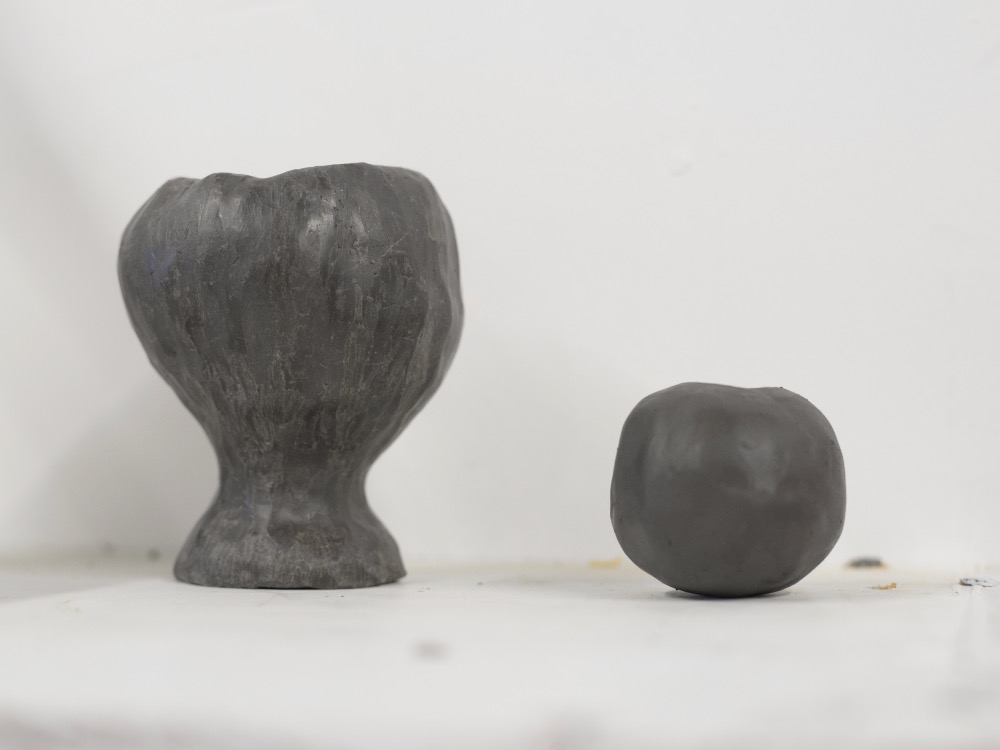
These were the two pieces from the clay, before firing.
From a previous visit to Poole, I remembered a smooth white clay, which could be dug easily from the shoreline of a lake. This was in Ham Common, another former clay pit, and now a nature reserve.

Again I made a small vessel in the sunlight. This time I had a film camera with me.
This clay fired comfortably to 1250, being very rich in Kaolin, hence the whiteness of the clay. It also had iron rich veins which give it a beatiful red mottled texture if not tampered with too much. I later returned to dig a few kilos from the shore.
I wanted to look at clays closer to home so local to Kent or preferably East Kent. While the clay in the west of England is more versatile, having a higher kaolin content and therefore higer firing temperature, local clay can be very nice to work with. There are three main beds of clay in the South East, Thames bed which includes the clay in the Thames Estuary and includes all the clays north of the North Downs. Gault Clay which is beneath the North Downs but rises to the surface in Folkestone. Lastly Weald Clay is between the South Downs and the Nort Downs in the Weald of Kent. There are traces of clay extraction west of Ashford on maps. Its easy to find clay pits on old OS maps. There is also a book by Graham Sutherland who was a local potter.
Locally, the nearest clay is between Reculver and Herne Bay. This clay is part of the cliffs which are mainly sand/clay deposits, but in parts a purer clay, gray in colour, can be found. It wasnt really possible to identify where in the cliff the clay originated as I dug it from what had falen from the clifs

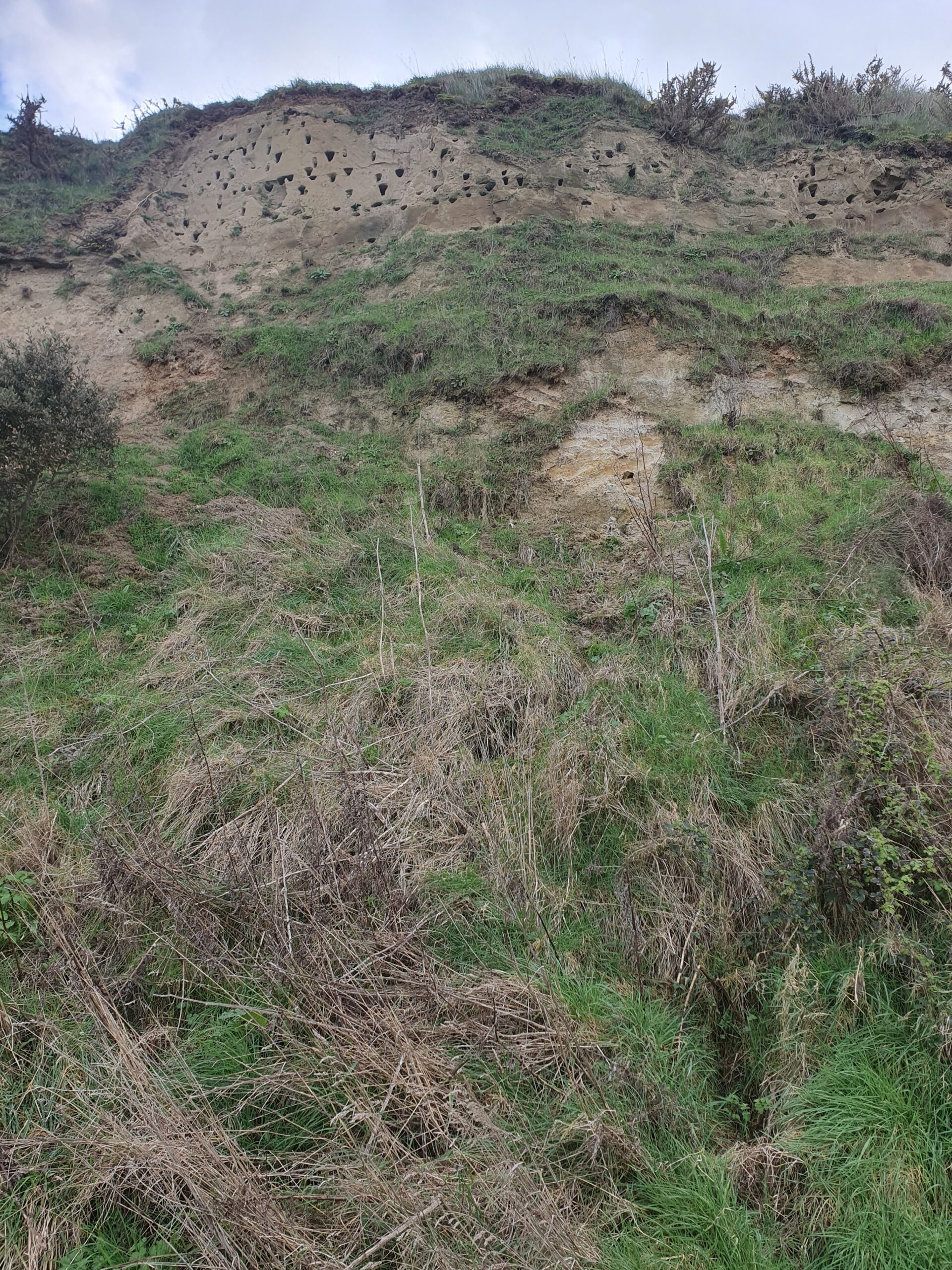
Higer up in the cliff sand martins nest in the drier sandier earth.
This clay was very nice to work with, supple and easily held its shape.
Firing was inconclusive due to a kiln malfunction, firing well above the intended temperature and beyond the temperature the clay was able to withstand.

The reculver clay is the buff colour in the middle. this shows the test still in the kiln having accidentally fired it to cone 6, (approx 1225C). many of the other tests melted entirely at that temp. the other clays were from also fro the Thames clay beds, from Hoo and Sheppy
Folkestone Clay – Gault – high Bentonite/Smectite. great glaze – this was on a stoneware tile and fired at 1230C
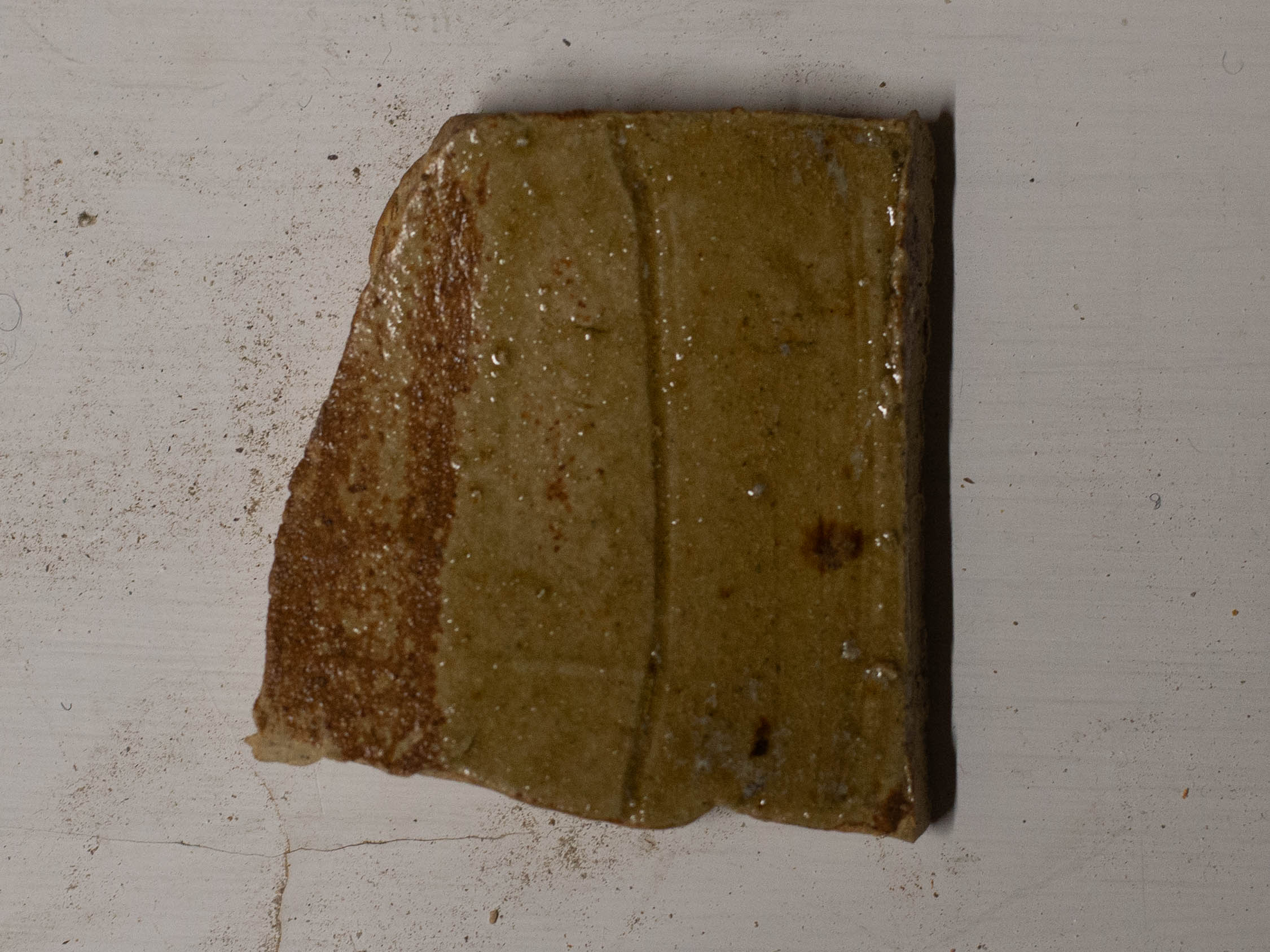
Gault from the top of the cliff near Folkestone has a perfect blend of clay/silica/flux to work as a glaze. the clay recovered from the base of the cliff is less well adapted and needs more silica/flux to work as a glaze
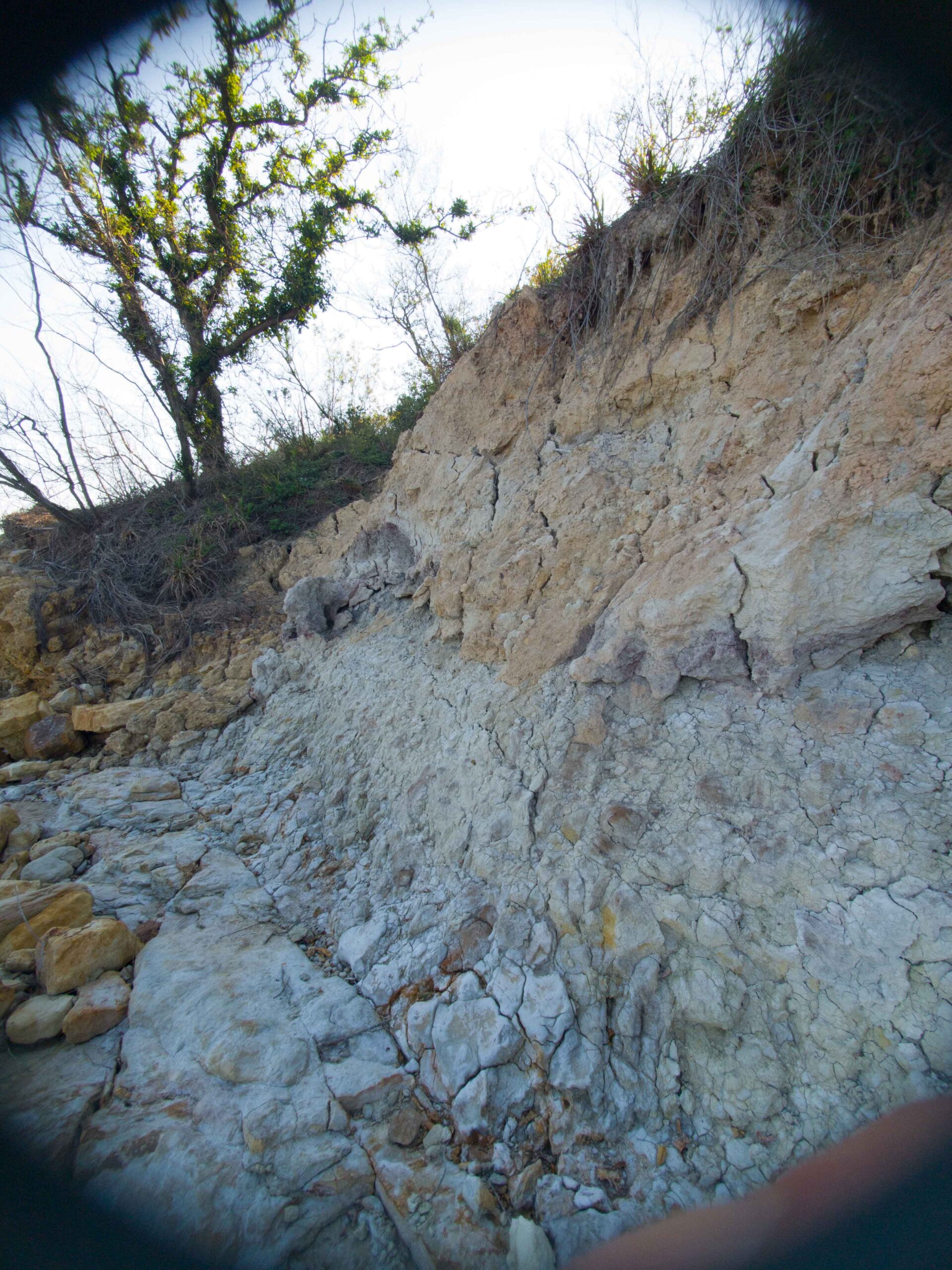
This photo is of the base of the cliff at Fairlight Glen. Access is possible along a footpath but its 20m on foot to the nearest road so quite a burden to carry the clay. It is however a beautiful walk along a stream and if feels very tropical on a hot day like this. Fairlight has an unofficial naturist beach and the path is well kept. Towards the end, the path drops down onto some dusty pale clay where the cliff has eroded. At the steepest part, people have installed some ropes to hold onto. The beach is strewn with boulders but the cliffs here are quite varied. The clay here looks very high in Kaolin, but also includes seams of yellow, grey and a red clay. I took a few pieces dry on my first vist but should explore the area a little further to see what quality might be available.
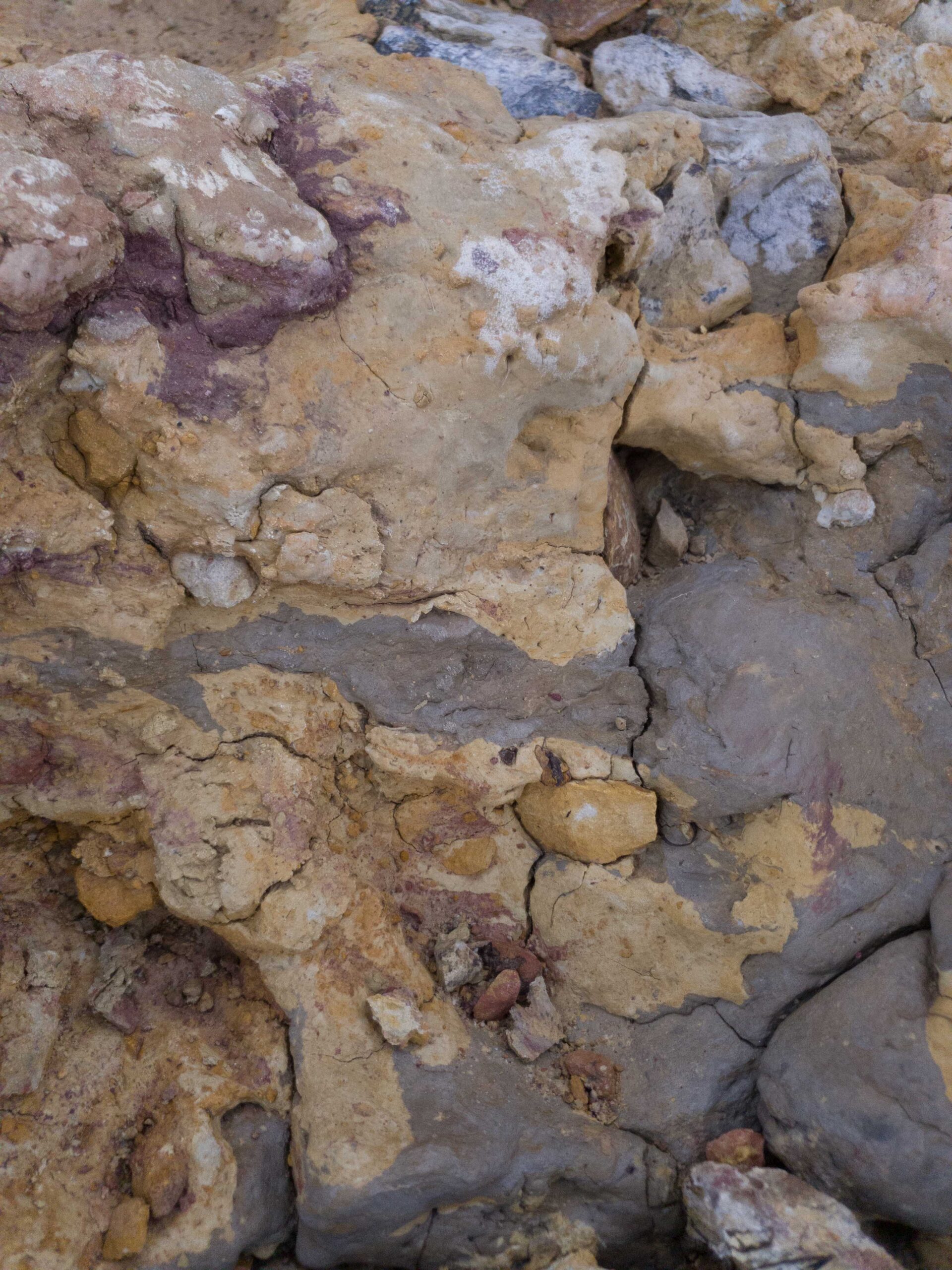


This is a sample of the red and grey clay, relatively well polished and still humid. The white clay is quite high in sand. That may be fine, I think it will fire at stoneware temperatures but will try it first at 1160 or something.